





WIP.0
The origin of production.
Context
In France alone, nearly 350,000 people declare income as independent creators and Craft Designers among them. For most it isn't enough to live on: the median Designer earns around 8,300 euros a year from their craft. They keep a side job and sell only through Instagram.
Role
Product designer, two-person team.
Led the UX research and problem framing
Led the UI design
Led the visual identity and brand system
Task
Ran market research: surveys, interviews, competitive analysis
Mapped the emotional journey and identified the core tensions
Defined the task flow between maker and buyer
Mapped the site architecture for both roles
Built the design system and the prototype
Result
A mobile pre-order platform. Makers validate real demand before spending a euro, and production only starts once it's proven. No blind production, no dead stock.
Informations
Timeline — 5 weeks
Skills — UX research, product strategy, design system, brand


They make beautiful things. They just can't sell them
Most makers keep a side job and sell only through Instagram. I lived this world. That's where the project started.

The gap was in the data itself.
Everything measured was administrative: income, precarity, status. Nobody was measuring how makers actually work.

So we went and measured it ourselves.
A mixed-method study, deliberately narrow. Not artists, not hobbyists, not fashion. Contemporary makers of physical objects, people with the ambition to live from their craft: ceramics, small furniture, lighting, textile, jewellery, leather.
A quantitative survey to size the patterns, then in-depth interviews to hear the reasoning behind the numbers.
Three steps: measure, listen, cluster.


How they test demand, how they pay for it
They validate on likes and produce from savings. Two habits that set the trap.

Four tensions, feeding each other
Financial fear on the surface. Underneath, a deeper one: never finding an audience.

The same six-step arc, ending the same way.
Mapping the interviews against one timeline, a single emotional journey repeated across almost every maker: euphoria, a false signal, a blind leap, a wall, and resignation.
The insight nobody was measuring
0%use pre-orders to validate demand. The whole problem in one number: makers carry 100% of the risk, upfront, blind.
A self-reinforcing loop
The signal is fake, so the loop never breaks
Likes feel like proof. They never confirm anyone will pay.
Three constraints. You cannot solve all three at once.
Time, money, visibility. You can't solve all three at once. WIP.0 takes on financial risk first.


Every platform sits on the wrong side of the leap.
Kickstarter funds ideas but leaves makers alone. Etsy sells what exists. Instagram never confirms a sale. The gap: proven demand, before production.

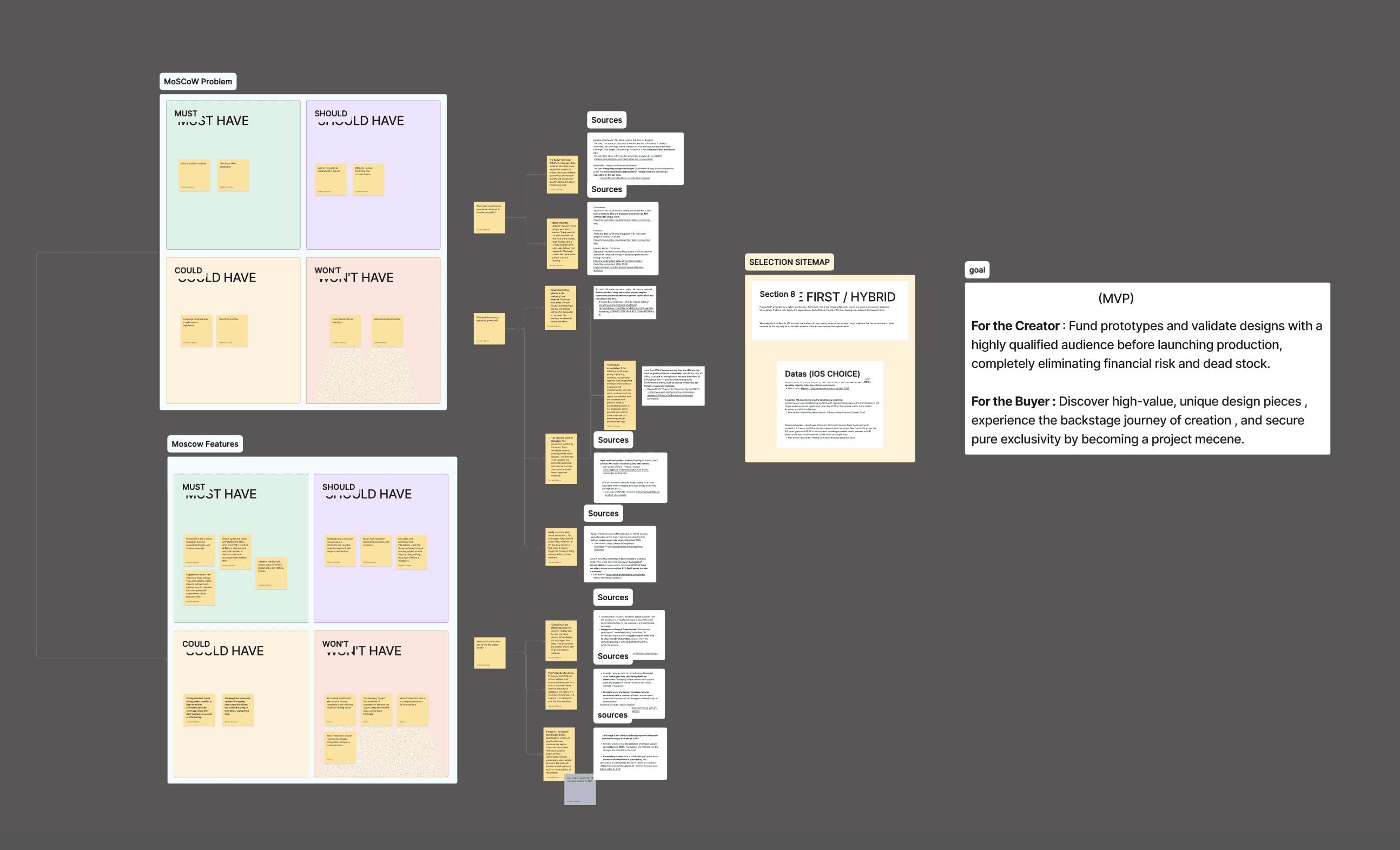
We looked at where the leap actually breaks.
The maker has a finished prototype and no way to know if anyone will pay. So the solution had to sit exactly there, between social interest and real commitment, and turn one into the other before any money is spent.


A mirror task flow between maker and buyer.
The core is a single choreography where one person's action triggers the other's experience. The maker posts a project with a funding gauge. The buyer commits with a bank pre-authorization, not a payment. Once the gauge is reached, 30% of the funds unlock for raw materials, and production begins.
From there the buyer opens a Workshop and follows the making step by step, through the maker's own photos, voice notes and timeline. The wait is not dead time. It is the story the buyer is paying for.




Visual identity
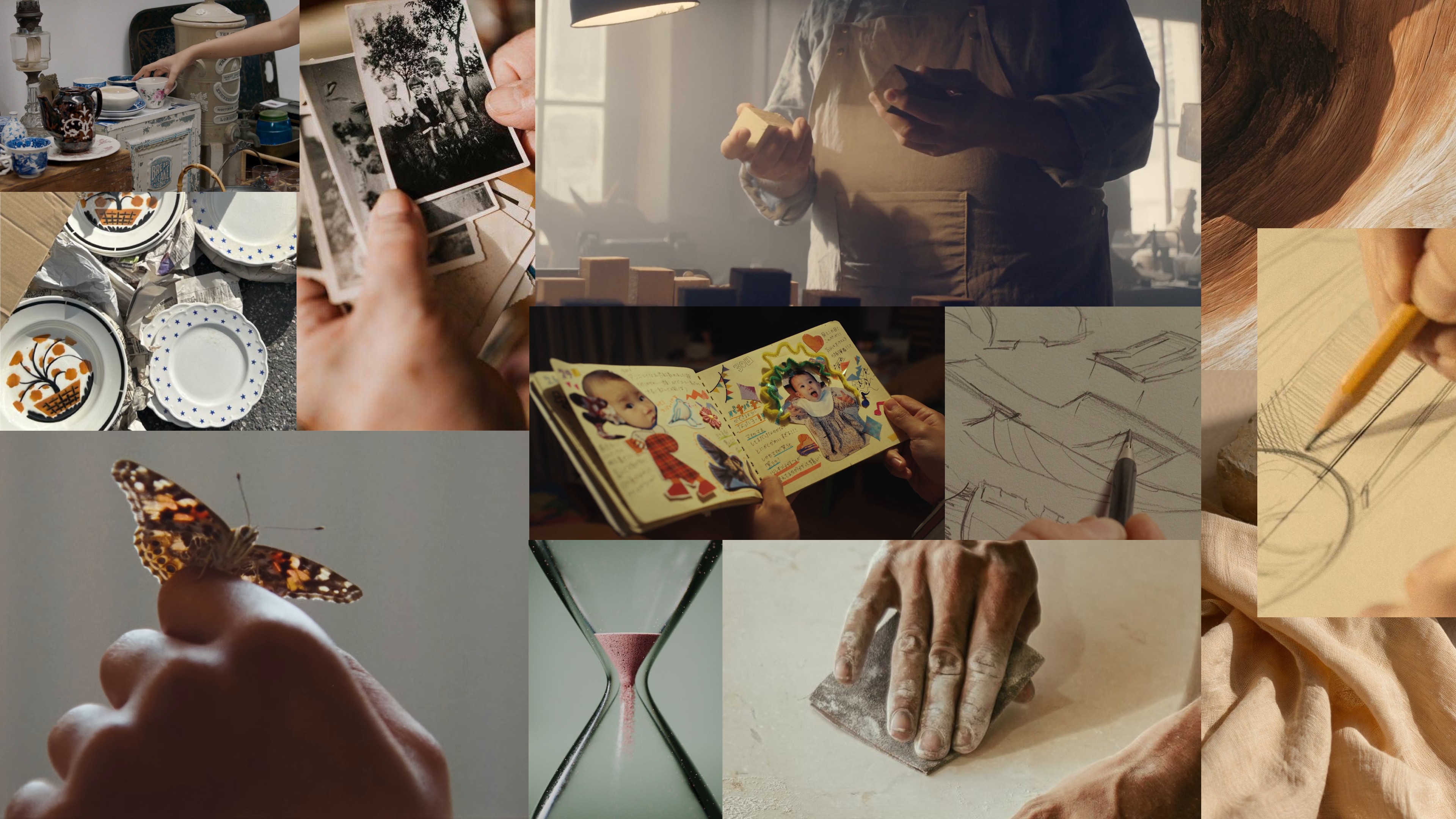
Raw, crafted, intimate, ephemeral. The identity mirrors the making itself: honest and hands-on rather than polished and corporate. We banned the clinical e-commerce white for a warm, textured paper. A monospace face carries the studio-notebook feeling. The interface steps back so the maker's raw material can speak, with a sense of urgency from the time-limited drops.


What I would sharpen
Solving one problem well beats solving three halfway, but the three are connected. Less financial risk frees the time makers spend recovering from failed launches, and that reclaimed time is exactly what they would need to build visibility. A WIP 0.2 would close that loop on purpose.
Mentor feedback surfaced a framing gap: the presentation never explicitly named the three-constraint triangle, so it was not obvious that WIP.0 solves one side of it on purpose rather than all three. The onboarding and parts of the UI would also need another pass.
WIP.0 started from one conviction: makers should never have to bet their savings to find out if anyone wants what they make.
Credits
Product Designer
Charles Ardilouze